Tunis hosts JCI’s 110th anniversary world congress
The JCI World Congress 2025 (link) convened in Tunis, Tunisia, from November 4–8, 2025, bringing together more than 3.000 young leaders from over 120 countries under the theme “Leading by Innovation”. The JCI World Congress 2025, also widely referenced as JCI World Congress Tunis and JCI World Congress 2025 Tunis, was held under the High Patronage of President Kaïs Saïed and supervised by Prime Minister Sarra Zaafrani Zenzeri. For Tunisia, the JCI World Congress 2025 marked the country’s second time hosting the global JCI gathering after 2009, following a multi-year bid that JCI Tunisia secured by unanimous vote at the 2023 Zurich Congress.
One of the most consequential outcomes of the JCI World Congress 2025 was the election of JCI Bolivia’s María Alejandra Castillo Saavedra as 2026 World President. She became the first Bolivian to lead the organization, standing on the platform “Lead. Connect. Evolve.” In that sense, the JCI World Congress 2025 was not only an anniversary celebration, but also a leadership transition point for the global JCI movement.
What “Leading by Innovation” looked like at the JCI World Congress 2025
The JCI World Congress 2025 took place across two principal venues in Tunis. The Radisson Blu Hotel & Convention Center on Avenue Mohamed V hosted the General Assembly, training labs, and competitions, while the architecturally striking Cité de la Culture de Tunis staged the Opening Ceremony and major plenaries. Pre-events for the JCI World Congress 2025 began on November 2, and an extensive board program started on November 3.
Organizers of the JCI World Congress 2025 mobilized roughly 250 volunteers and 50 institutional partners, with Tunisie Telecom among the leading national sponsors. Cultural programming connected delegates with the Medina of Tunis, a UNESCO World Heritage site, as well as Carthage and Sidi Bou Saïd. Delegates also experienced Sahara excursions, themed party nights, a Global Village, and the closing Gala Dinner on November 8. This made the JCI World Congress Tunis edition both a formal leadership congress and an immersive cultural experience.
Attendance figures around the JCI World Congress 2025 varied across sources. Tunisian logistics planners cited 2,500 participants, the Tunisia Convention Bureau projected more than 4,000, and JCI HQ settled on “3,000+ from 120+ countries.” The largest national delegation at the JCI World Congress 2025 came from Japan, with 1.385 registrants, reflecting outgoing 2025 World President Keisuke Shimoyamada’s home National Organization Member. JCI Tunisia, led in 2025 by National President Ameni Slimene with Omar Bejaoui as Congress Director, counted roughly 4.000 members across 170 local organizations and ranked first in JCI’s Africa & Middle East region.
A new global board takes shape
The General Assembly election on November 6, 2025 was one of the defining moments of the JCI World Congress 2025. María Alejandra Castillo Saavedra succeeded Keisuke Shimoyamada, whose 2025 presidential theme was “Rise Up”, while Shimoyamada moved into the role of Immediate Past President. The newly elected board reflected an unusually geographically diverse slate and gave the JCI World Congress 2025 a clear global governance legacy.
The 2026 leadership team included Secretary General Elvin Teo from JCI Singapore, a Treasurer from JCI Bangladesh, and General Legal Counsel from JCI USA. Executive Vice Presidents were elected by region: JCI Nigeria for Africa & Middle East, JCI Hong Kong China for Asia & Pacific, JCI USA for the Americas, and Stefanie Van der Sman of JCI Netherlands for Europe. Regional Vice Presidents from Africa & Middle East included representatives from Morocco, Nigeria, Senegal, and Zimbabwe, signaling continued investment in the host region after the JCI World Congress 2025.
Teo subsequently confirmed that a five-year Youth Action Resolution 2026–2030 is being shaped through Area Conferences in Spain, Antigua, Côte d’Ivoire, and Japan before final ratification at the 2026 Clark, Philippines Congress from November 11–15, 2026. That means the JCI World Congress 2025 served as the launchpad rather than the finish line for JCI’s next strategic plan.
The TOYP class of 2025 and a Tunisian double
The Ten Outstanding Young Persons of the World ceremony was the marquee awards moment of the JCI World Congress 2025. Tunisia uniquely placed two honorees on its home stage: Dr. Sana Amairi-Pyka, lead scientist for quantum communications at Abu Dhabi’s Technology Innovation Institute in the Scientific/Technological Development category, and Asma Mansour, co-founder of the Tunisian Center for Social Entrepreneurship in the Business/Economic/Entrepreneurial category.
Other 2025 laureates celebrated at the JCI World Congress 2025 included Dr. Eisuke Shimizu from Japan, whose Smart Eye Camera has performed 200,000 exams across more than 60 countries; Dr. Abdulkarim Ekzayez from Syria, associated with Action for Humanity and King’s College London; Ifedayo Hadijat Durosinmi-Etti from Nigeria, founder of Herconomy; Dr. Wilson Wai-Yin Cheung from Hong Kong; cultural achievers Kent Ng Kun Kwan from Malaysia and National Geographic Explorer Gab Mejia from the Philippines; Atakan Karataş from Türkiye for legal-tech and governance; and Zerrin Temiz from Türkiye for personal improvement.
The judging panel for the JCI World Congress 2025 TOYP recognition featured Khoo Chia Ching of Zoho, Kathrin Ebner of the Ban Ki-moon Centre, Bill Fisher of Quantic, and Asato Ohno of BNI Japan. Each was connected to a JCI partnership announced or deepened during 2025. The Saturday-night Gala on November 8 also named JCI Senator Oluwatoyin Atanda of Nigeria the Most Outstanding National President of 2025 for her “ELV8 – rising together for a sustainable future” agenda. JCI Nigeria was also recognized for its contribution to the global Impact Drive.
At the JCI World Congress 2025, the Best Local Global Goals Project Award went to JCI Dominica’s “Read With Me” early-literacy initiative, linked to SDG 4, Quality Education, with Local President Phael Lander accepting. Continental and national winners of the Creative Young Entrepreneur and Public Speaking competitions also advanced from Tunis, with European representatives Petr Šťastný from the Czech Republic and Anela Denic from Finland competing in the world finals.
Mission, mandate, and the SDG balance sheet
The JCI World Congress 2025 was framed by JCI’s mission: “to provide leadership development opportunities that empower young people to create positive change.” JCI holds General Consultative Status with UN ECOSOC, upgraded from Special status in July 2011, placing it among fewer than 150 NGOs at this top tier. The organization structures its programming around four Areas of Opportunity: Individual, Business & Entrepreneurship, Community Impact, and International Cooperation.
Membership spans citizens aged 18–40 across roughly 5,000 local organizations in more than 100 countries, with around 200,000 active members. Against that backdrop, the JCI World Congress 2025 became the stage for the release of the 2025 Impact Report, documenting more than 1,000 projects across 100+ countries advancing all 17 UN Sustainable Development Goals and engaging more than 100,000 young leaders.
Keisuke Shimoyamada’s outgoing year, highlighted during the JCI World Congress 2025, emphasized partnerships that materially expanded member benefits. These included a new education tie-up with Quantic School of Business and Technology offering accredited Master’s pathways, a deepened partnership with the Ban Ki-moon Centre for Global Citizens in Vienna, and fresh agreements with BNI Japan and the Crocodile Foundation. A redesigned JCI logo also debuted during the 2025 cycle, reinforcing how the JCI World Congress 2025 connected symbolic renewal with practical member value.
Why the JCI World Congress 2025 in Tunis mattered diplomatically and economically
For Tunisia, the JCI World Congress 2025 was an unmistakable soft-power play. Prime Minister Sarra Zaafrani Zenzeri personally promoted the event in Yokohama in August 2025 during TICAD-adjacent meetings, framing Tunisia as “a bridge between Japan and Africa.” That positioning helps explain the outsized Japanese delegation at the JCI World Congress 2025. Governor of Tunis Imed Boukhris chaired final preparation meetings on October 28, coordinating ministries on logistics, security, and public-realm aesthetics.
Domestic media including La Presse, L’Économiste Maghrebin, Managers.tn, Tekiano, TAP, and Web Manager Center covered the run-up to the JCI World Congress Tunis edition favorably. They cast the JCI World Congress 2025 as a vehicle for business tourism, foreign investment, and the repositioning of Tunisia as a regional hub for AI, fintech, and the digital economy.
The political backdrop around the JCI World Congress 2025 was more complicated than the official narrative. Tunisia’s economic indicators remained strained, with roughly 0.4% growth in 2024, about 16% unemployment, debt near 80% of GDP, and stalled IMF talks. President Saïed’s consolidation of executive power since 2021 had also drawn international criticism, while Prime Minister Kamel Madouri was abruptly dismissed in March 2025. None of this surfaced as Congress controversy in retrieved coverage; the JCI World Congress 2025 functioned, by design, as an apolitical showcase. There is no public confirmation that President Saïed personally attended the Opening Ceremony, only that he extended High Patronage and that the Prime Minister supervised execution.
What the Tunis edition actually changes
The lasting impact of the JCI World Congress 2025 is likely to be felt in three areas. First, it marked a generational handoff to a Bolivian woman leading JCI globally for the first time. Second, it created an explicit pivot toward the 2026–2030 Youth Action Resolution to be ratified in Clark. Third, it consolidated education and partnership pipelines with Quantic, the Ban Ki-moon Centre, BNI, and the Crocodile Foundation, turning JCI membership into a more tangible professional asset.
The TOYP slate presented at the JCI World Congress 2025, with two Tunisians, two Turks, and three medical or scientific laureates, signaled where JCI is staking its credibility: science, health innovation, and entrepreneurship anchored in the Global South. For Africa & Middle East, hosting the 110th anniversary, seeing a Nigerian named Most Outstanding National President, and placing Nigeria at Executive Vice President level formed a coordinated demonstration of regional weight.
The unresolved question after the JCI World Congress 2025 is whether Castillo Saavedra’s “Lead. Connect. Evolve.” administration can convert the symbolic momentum of JCI World Congress 2025 Tunis into measurable membership growth in regions where JCI’s footprint has been flattening, especially Europe and the Americas.
Pretour: 26 people. 4 countries. One unforgettable ride.
Before the JCI World Congress 2025 in Tunis even started, we went all in. Together with participants from Belgium, Switzerland, the Netherlands, and Germany, we took on a full country tour across Tunisia.
- Desert sunsets on camelback 🐪
- Jeep rides straight through the dunes — Tatooine vibes included 🚙✨
- An ancient amphitheater that hits different
- Being welcomed into a Tunisian home in the south
- Salt lakes near the Algerian border
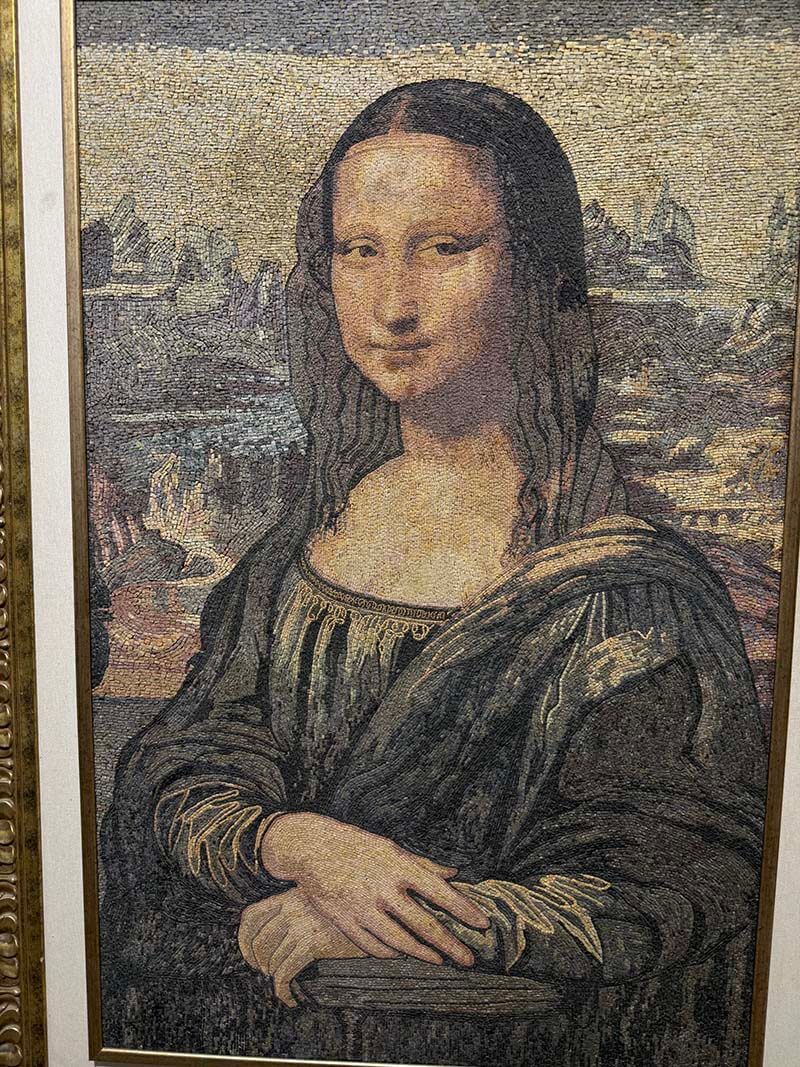
- Mosaic art at El Djem, where history speaks
By the time the congress began, we weren’t strangers anymore. We were a crew, and the connections only kept growing.
Have a look to our other (inter)national events or read more about the upcoming JCI World Congress 2026 (Philippines).